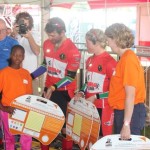
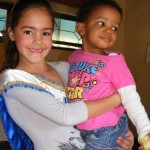
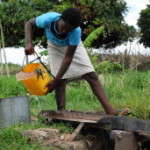
Disimelo Dludla’s mom is amongst hundreds of parents from Eshane village, KwaZulu Natal, South Africa, who still marvel at the difference that the introduction of psychomotor education has brought to the lives of their little ones. The 4 year old girl has been on the psychomotor programme for less than eight months, but watching her play with her mates, you cannot miss the difference the programme has already made in her life. Unlike an ordinary village child, Disi (as her mom calls her) is able to express herself with confidence and participate actively in discussion and not to mention her conflict resolution skills. World Vision has identified such skills as handy for children in this area, ravaged by domestic violence and sexual abuse cases on children, thus the introduction of this programme.
In view of this, the psychomotor program has particular relevance as it promotes independence, protection, responsibility, self-discipline, self-esteem and respect. It helps the child develop harmoniously in the society. World Vision’s Umvoti Area Development Program (ADP) works with teachers to create both a comfortable and safe play environment for the little ones. The ADP operates in a rural area where some cultural practices are not favorable to a child. Children are not listened to and are rarely involved in decision making which limits them in sharing their ideas and expressing themselves on any thing that concerns them and their general wellbeing. “Psychomotor has taught them to stand up for their rights, negotiate and resolve conflicts amongst themselves as children without involving an adult person. It has also taught them to love and respect themselves, “ said Umvoti ADP Manager, Sayinile Mzolo.
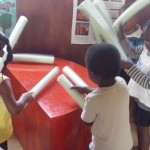
Mzolo added that the ADP has heard cases of children who commit suicide and are hoping that children who have attended psychomotor will not have to hurt themselves and others as this has been instilled to them at an early age. For years, Disi who lives with her single mother with no contact with her father did very poorly at school and was violent towards her peers and cousins. Her mom received constant complaints from school teachers and neighbours about her negative behaviour. Based on the interdependence of physical, affective and social functions of the young child with its environment, the psychomotor method empower children whilst playing freely with specific equipment, in a non-violent and non-prescriptive environment. However, their freedom is conditional on a double rule “We do not hurt others, and, we do not hurt ourselves.” Recent research has enlightened the understanding of the fundamental role of emotions in the development of the brain of the human being. Intended for the children up to the age of six or seven, the psychomotor education takes full advantage of the ‘golden age’, when a child is known to be most receptive in terms of neurological, psychological and social development.
This new way of life for children has brought so much hope and inspiration in this rural community. “My child has improved, she is less aggressive. The fact that I now reprimand Disi far less than I used to has brought me a piece of mind. It also means she is becoming a very self disciplined child, and I know it is all because of the psychomotor,” said Disi’s mom, Thandeka Sithole. Meanwhile Thando Sithole’s (5 years), who also attends the psychomotor, has become an instrument of peace in his family. “The other day we had a heated argument with my husband, and Thando reprimanded us. He just said, don’t you know that you are going to hurt each other? We couldn’t help and had to stop the shouting immediately with embarrassment,” said Thando’s mom.
It seems also that children growing up in difficult conditions like those from Eshane are regarded as less likely to be ready for school, while children who have experienced good, quality education in the ECD phase progress well, once they have entered formal schooling. This programme also prepares children for formal learning because once they start grade 1 they will be confident and have the ability to express them and follow instructions from the teachers. The Government has acknowledged this. During the official launch and the handover ceremony of the programme to Department of Education and the community, government vowed to run with the programme. “This surely is the crucial time to invest in the young minds, when they are just starting to figure out who they are and what life is about. This is the stage where you need to encourage goodness, love for each other and self discipline,” said Mr Hlanganani Khumalo, Distric Education Inspector.
Even the teachers notice the difference between children who attend the psychomotor and those who do not. They also believe the programme carries a solution for the troubled world. “The behavior of the children who are part of the programme is very different from those who do not attend psychomotor. The psychomotor children are very principled and disciplined. One thing I appreciate about them is their ability to take care of their mates, ” said Bongekile Mkhize, a teacher.
Other News Posts of Interest
 World Vision’s take on the OVC conference in Durban
 Comrades Marathon Association launches the 2013 charity initiative
 World Vision presents the success of the psychomotor program in Umvoti at the OVC conference in Durban
  World Vision Child Health Now Campaign
 World Vision Advocates for Children’s Rights to Life and Good Health
 Children’s bankable venture
 We tackle the root causes of poverty and injustice in SA


 sending...