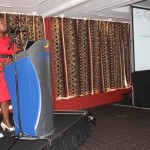
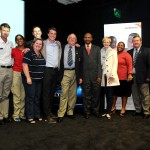
“The Church preaches abundant life, but baptises children and leaves them to die”, these were the sharp and thought-provoking words of Thabisile Msezana, one of the speakers at the recent National Church Leaders Summit hosted by World Vision South Africa in partnership with the SA Council of Churches.
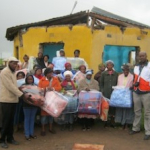
The Summit drew together 75 influential local and national church leaders in South Africa to deliberate on the urgency of the church’s response to child mortality rates in South Africa. The Summit was part of Child Health Now campaign initiative aimed at ensuring that the church places child and maternal health as top priorities on their agenda.
With speakers from UNICEF, the Nelson Mandela Children’s Fund, NGOs and health experts, Millennium Development Goals 4 and 5 became the cornerstone of the dialogue as speaker after speaker emphasised the amount of work that needs to be done.
Going back to basics
One of the key objectives of the summit was to create a framework of action on how the church can be engaged in advocacy and policy influence at local, national, and international levels on child and maternal health. Church leaders debated and shared ideas on practical ways the church can respond.
The group discussions culminated in a draft Child Health Now Framework of Action document which will serve as a guideline to guide the church’s advocacy efforts.
The CHN campaign will continue to monitor work done by the churches to ensure the dialogue translates into decisive actions, which will hopefully culminate into a meaningful involvement on a permanent basis.
Focus point for World Vision - Child Health Now!
World Vision Volunteer Linh Dang from Australia spent two days with the Child Health Now team during their field visit to Cape Town. She shares her experience at World Vision’s Atlantis ADP.
Words and photos by Linh Dang
As part of my personal travels, I decided to volunteer some of my time and photography skills while in South Africa. I spent two days with World Vision staff, Sikelelwa Geya and Nomagugu Masuku, who are the campaign team for Child Health Now, a WV programme to improve the health of young children and mothers.
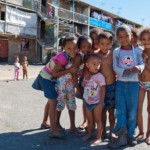
First we visited Atlantis. Once a busy manufacturing town, Atlantis is buckling with over 80 percent unemployment. The children are left to fend for themselves during the day as parents look for work or try to scratch out a living. Drugs and gang violence are rife.
The World Vision office there is staffed by residents of the community and is located opposite the police station where it works closely with law enforcement. In the same yard as the police station is the Community Police Forum office (CPF) supported by WV.
I was shocked to learn that in communities such as this one, it is estimated that a child is being abused physically or sexually every 30 minutes. The CPF has facilities where the victims are assisted and counselled by staff in a safe and comforting environment, and evidence is collected to assist authorities with domestic violence and sexual abuse cases.
Most of the development workers in this ADP have been in the field for more than eight years and are each responsible for different sections of the community, with some individually monitoring up to 300 families a month, walking long distances daily to meet with each family.
They remain hopeful and positive despite the enormity of the situation, numerous challenges, risk to personal safety and constant exposure to despair.
With the Child Health Now campaign finishing in 2015, the field staff is working hard to educate and engage the communities on the importance of hygiene and health care. I couldn’t help but wonder what would happen to these field workers and their charges when the programme ends.
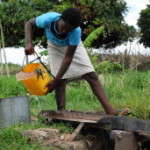
Sandra and her five children was one of the families we visited. They live in a makeshift 4-square-metre shack without electricity or plumbing. Every morning the family walks 45 minutes to collect water for their drinking and washing needs. All that they own is stored in six milk crates. Having been homeless for four years, she is grateful to have a place that they can call home, sleep every night and store their meagre belongings.
As a single mother, Sandra has found it difficult to find employment as well as look after her five children. Half of the grant she receives from government pays for the rent; from then on it’s hand to mouth from month to month. Sometimes they go without a meal and the children no longer go to school.
Meeting Sandra’s family was heart breaking. I felt so sad for her children who have never known a life without hardship and are so deserving of the essentials: security, nutrition and education.
We then headed to a local community soup kitchen. With little themselves and five boys of their own, the family runs a weekly soup kitchen from their home, feeding up to 100 children. The kitchen is self-funded and receives some donation from locals for soup ingredients. For many children, this is their only meal for the day.
Reflecting on my trip, the experience of the field staff, hearing accounts directly from the various families and witnessing the level of youth neglect and abuse in Atlantis, highlighted not only the importance of family but also role of the community in bettering the lives of these children.
My experience with the CHN team gave me a greater appreciation for the work that NGOs such as World Vision does – the problems are so huge and the issues so difficult.
I am immensely grateful for the time I spent with the team. Children are amazing little beings who need to be protected and nurtured. Thankfully, World Vision is doing just that for many of them.
More more on the Child Health Now Campaign
Other News Posts of Interest
 World Vision Child Health Now Campaign
 World Vision presents the success of the psychomotor program in Umvoti at the OVC conference in Durban
 - All Children have a fundamental right to health
 Promoting the well-being of mothers and children
 We tackle the root causes of poverty and injustice in SA
- Millions of children could be saved
- Hope for children once in despair


 sending...