In most rural areas of South Africa, traditional healers are the preferred and most accessible health care providers. They are far more in number than the modern medicine practitioners and are widely accepted in the society as the first level of contact and trusted health care providers. With increasing threat of HIV epidemic and critical shortage of resources for health, more especially in KwaZulu Natal and Eastern Cape, it has become essential that traditional healers are included in the HIV/AIDS prevention program.
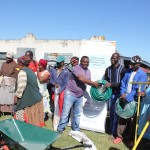
Sibongiseni Hloba, 25 years from Umzimkhulu has been practicing as a traditional healer for more than ten years now. He is one of the community members who after attending World Vision (WV) training through the Channels of Hope programme, which aims to engage spiritual leaders and faith based organisations in the response to HIV and AIDS. He has now become behaviour change activists, after his own ways of dealing with patients was changed by the trainings. He does all this through his work as a practitioner of traditional African medicine. Some of the different social and political roles he carries out in the community, include divination, healing physical, emotional and spiritual illnesses, directing birth or death rituals, finding lost cattle, protecting warriors, counteracting witches, and narrating the history, cosmology, and myths of African tradition.
He says the WV trainings have truly opened his eyes, and has improved the way he serves his community. “I will forever be grateful for attending that workshop. It opened my eyes, I now know the right way of treating people,” he said. Adding that from the HIV and AIDS workshop he was taught about the effects emotional scars can have on the person’s physical health. “It really helps to know that sometimes you need to understand the patient’s background, issues and challenges he is faced with, before attempting to heal,” he said.
In the country, cultural practices, social attitudes and economic conditions facilitate the spread of HIV and AIDS and complicate prevention. Social stigmas surrounding sexual transmitted diseases (STDs) and AIDS keep many from turning to the public health system for testing and treatment. And as a result many people continue to consult traditional healers when afflicted with STDs. Many people still believe that AIDS is due to witchcraft and a fetish conspiracy against the infected person and traditional healers may be one of the principal sources of care utilized by people suffering from HIV and AIDS.
“As people who work with people’s lives on a daily basis, we need more of these empowerment sessions. I think we will save more lives if we were to get more of these trainings,” said Hloba. Adding that he now refer most of his patients to the local clinic. “I sometimes have to force my patients to go to the clinic as they become reluctant as they have to walk very long distances to access health centers, ” he added.
The World Health Organization (WHO) has estimated that up to 80% of Africa’s population makes use of traditional healers, and for many people in the rural South Africa, it is the only health system accessible to them.
Other News Posts of Interest
 World Vision raises change catalysts and nation builders in South Africa
- Church Intervention Reduce HIV and AIDS Related Deaths in Umzimkhulu
- Soft Skills for Teachers, the Solution to Education Crisis
 If you can’t feed a hundred people, then just feed one
 World Vision’s Unogwaja cyclists arrive in Pietermaritzburg
- Ncambele Residents Build Their Own Clinic
 World Vision SA exhibits at the OVC conference at ICC, Durban


 sending...