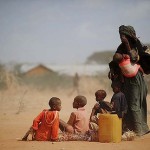
Almost one third of the children under five who die each year could be saved each year if governments rebalanced health spending to ensure provision of low-cost, simple interventions such as safe water and hygiene, bed nets, and basic maternal and newborn care.
A World Vision report has called for an urgent scaling up of preventive maternal and child health interventions, with a particular focus on bolstering community-level health interventions.
“Our world is in the grip of a chronic humanitarian crisis with more than 24 000 children under 5 dying every day,” says Lehlohonolo Chabeli, National Director and CEO of World Vision South Africa. “Yet we know that even in the poorest countries most child deaths are not inevitable.
Lives could be saved
“At least 2.5 million children’s lives could be saved each year by implementing low-cost, simple interventions such as water and hygiene, bed nets, and basic maternal and newborn care. As many as six million children could be saved yearly by combining these approaches with more strategic allocation of resources to meet needs at the community level and by fulfilled global donor commitments.”
Chabeli says most health funding at both donor and national levels is spent neither on the biggest child killers which are diarrhoea and pneumonia, nor on basic essentials like clean, safe water, sanitation and nutritious food.
“Prevention is better, and more cost-effective, than treating children when they get ill. If countries want to ensure the survival of their next generation, they must focus on providing low-cost, low-tech interventions to keep these young children and their mothers healthy.
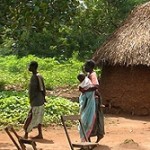
“Of course, it’s also true that an estimated 270 million children live in what amounts to a health care desert, lacking access to even the most basic provision. Millions more are confronted with health care that is patchy, and often unaccountable, unaffordable and poor quality.
Chabeli adds, “All children have a right to health. For there to be any chance of saving six million children a year from preventable causes, leaders at all levels must make keeping mothers and children healthy a top funding priority.”
History shows that this is worth doing: in 1960, 20 million children a year died from preventable causes, compared with 8.8 million children now.
“It is a fact that six million more children a year could be saved from death by 2015. It is a fact that more than 24 000 children will die today. These are the reasons behind World Vision’s decision to have launched a global campaign, “Child Health NOW”, to improve maternal and child health in communities where it works.
Key child health core interventions include:
Adequate warmth for the child, exclusive breastfeeding, early identification of asphyxia and home-based resuscitation techniques, clean birthing practices and hand washing, cord care, early identification of infection and referral, exclusive breastfeeding and effective complementary feeding, vitamin A and zinc, hand washing, clean water, oral rehydration salts, hygienic food preparation, early identification and referral, insecticide treated bed nets, wound treatment, better nutrition.
Key maternal interventions: later marriage and birth spacing, iron folate and calcium supplements, insecticide treated nets to reduce malaria, clean birth practices and hand washing of mother and birth attendant, peer support of mother, immediate breastfeeding to reduce bleeding, strategies to reduce delays in obtaining treatment.
Other News Posts of Interest
 World Vision Advocates for Children’s Rights to Life and Good Health
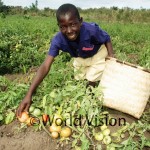 Promoting the well-being of mothers and children
 World Vision Child Health Now Campaign
- Millions of children could be saved
- Hope for children once in despair
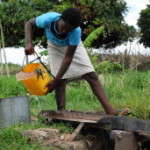 Heavy storms leave many homeless and distraught
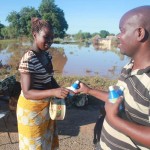 Mozambique floods Help Support the People of Mozambique


 sending...