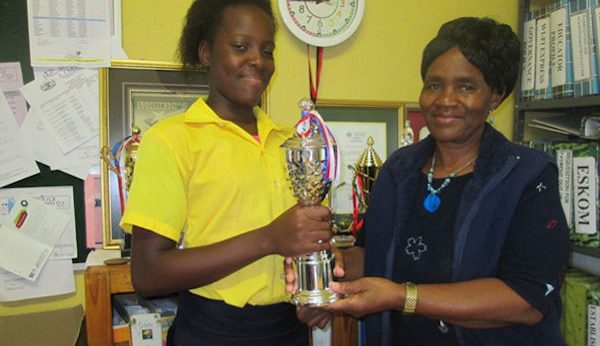
Mbhashe learners benefit from Digital Learning Tools
On Friday, 27 August, Eastern Cape MEC for Education, Mr Fundile Gade, and Executive Mayor of Mbhashe Local Municipality, Mr Samkelo Janda, joined World Vision South Africa in handing over digital learning tools and resources to Nomaka Mbeki Senior Secondary School in Mbhashe in the Eastern Cape.
In efforts to help vulnerable children and support improved learning in the rural Mbhashe area, World Vision South Africa is working closely with the Department of Basic Education (DBE) and the local Mbhashe Municipality to help promote technology advancement and learner participation in schools.
Digital Learning Tools
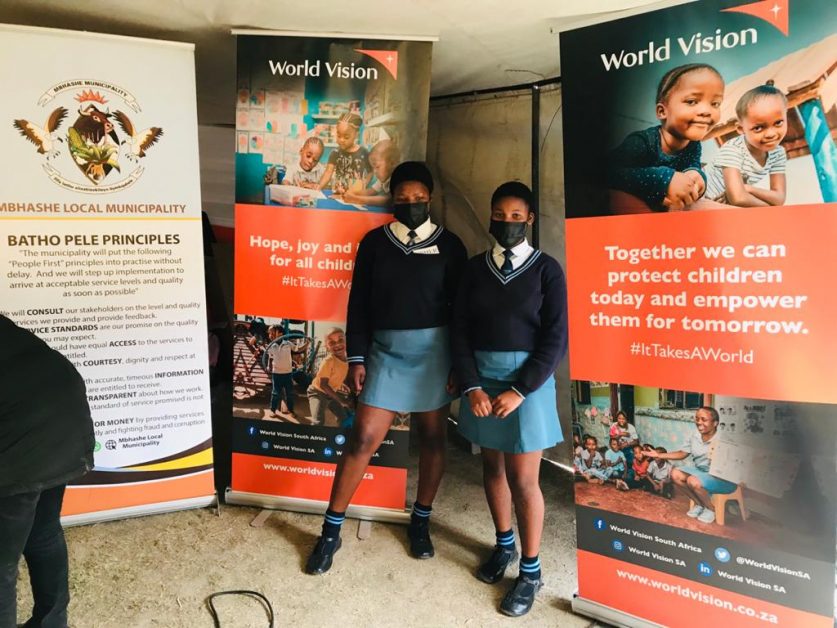
Digital learning tools, resources and equipment have been distributed across up to 20 schools in the area, benefitting more than 3,400 learners.
150 computers, 1,530 scientific calculators, 8 WIFI routers loaded with 20GB for the next 6 months, and 32 interactive white boards (which have been found to improve learner participation more than traditional boards) have been distributed.
Further to this, 40 handwashing stations have been installed in 20 schools.
“We are excited about the positive impact these resources will have on improving learning outcomes in these rural schools.
“Learner participation in poorer schools is hindered by so many factors, but we can’t afford to let them get left behind, especially now during the covid-19 pandemic.
“Things like poor hygiene and sanitation, which leads to illness and absenteeism, and limited access to data and digital learning tools don’t give our youth the best start in life. We need to change this,” said Bruce Layzell, National Director World Vision South Africa.
World Vision South Africa has been working with the Mbhashe Municipality and the national DBE since 2010 to identify how they can improve the quality of education in schools.
Mr Tsipa, Circuit Manager of J.S S’kenjana Circuit in Mbhashe said, ‘growth and development are only real when it touches downtrodden and forgotten communities, therefore this gesture by World Vision will see many matriculants from very backward communities achieving and getting a matric certificate.
“One learner failing in Grade 12 is one too many, as a result of these whiteboards many families will rejoice when the Grade 12 results are announced and their chances of economic growth doubled,”